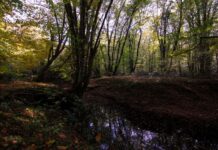
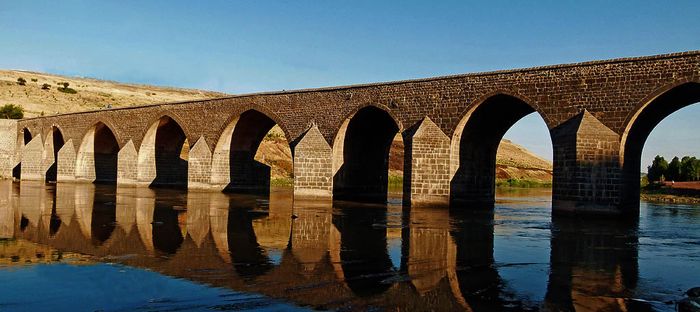
Along our journey, we came upon a newly built khan, also known as a caravanserai, a resting place for travelers and merchants. From there, we continued toward Mohács, a place of great historical importance. Before reaching this town, we crossed a small bridge over the Curasse Brook. This brook often overflows during heavy rains and floods the nearby land Underground Villages and Hidden Lives.
Near this spot, King Louis II of Hungary, a young and unfortunate ruler, lost his life. After the famous Battle of Mohács, fought against the forces of Sultan Suleiman the Magnificent, the king fled the battlefield. Sadly, his horse slipped in the mud, and the king drowned in a marshy place. With his death, Hungary not only lost its king but also its crown, as the defeat marked a turning point in the country’s history.
The Battlefield of Mohács
We visited the very place where this noble prince died. It is remembered as the site of a reckless battle that cost Hungary its independence. Standing there, one cannot help but reflect on how a single day changed the fate of a kingdom. The land itself seems to carry the memory of that great loss.
In the surrounding area, we encountered a large caravan of two to three hundred people. Some of them were traveling to holy places for religious devotion, accompanied by Janissaries, who were assigned to guard them. Others were settlers, moving with official permission to live in different regions of Hungary, which was then under Ottoman influence Ephesus Tours Guide.
Trade, Livestock, and Imperial Privileges
In several places along the road, we saw great herds of oxen being driven toward Vienna. These animals were intended to supply meat to the city and its surrounding countryside. The trade was organized by the Passern Company of Vienna, a powerful commercial group. Because of special privileges granted by the Grand Signor (the Ottoman Sultan), these traders were allowed to pass freely through Ottoman lands without interference.
This sight showed how trade continued even during times of political tension and conflict. Commerce connected cities and empires, despite wars and changing borders.
Arrival at Eszék (Osijek)
From Mohács, we traveled through Baranyavár, Darda, and Dráza, until we reached Eszék, also known as Osijek. Some believe this city stands on or near the site of the ancient Roman settlement Mursa. The town is built on low ground, and its streets are covered with wooden planks instead of stone, likely because of the marshy soil.
At one side of the city gate, we observed part of a Roman inscription, beginning with the letters M. AELIA. On the opposite side, there was a carved stone head of a maiden, possibly from Roman times. We also saw an unusual sundial, which had been brought from Szigetvár.
The Great Wooden Bridge of the Drava
Among all the sights in Eszék, the most remarkable was the great wooden bridge. This bridge was carefully designed and built partly over the Drava River and partly across the surrounding marshes. It stretched for nearly five miles, making it one of the longest wooden bridges in Europe at that time.
The bridge was fenced on both sides and had towers every quarter mile, providing protection and control. The section over the river had been burned during the last wars by Count Nikola Zrinski, but a new bridge was later constructed in its place.
This journey through Hungary and the Ottoman lands reveals a world shaped by war, trade, and travel. From the tragic death of a king to the steady movement of caravans and merchants, the landscape tells stories of loss, resilience, and connection between empires.