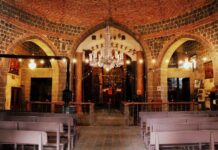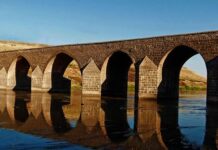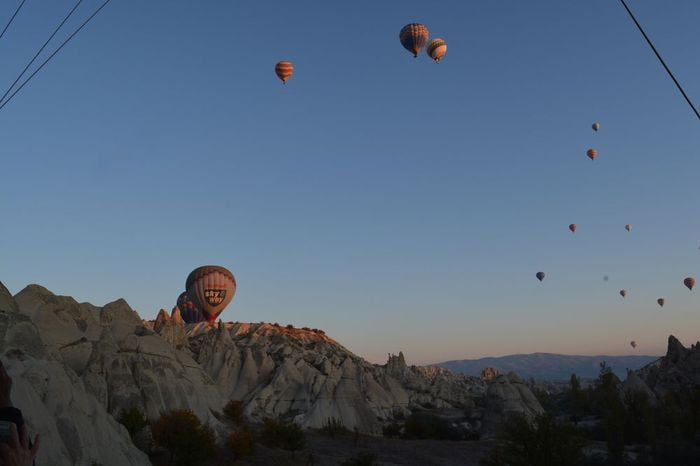
In this country, many families and the inhabitants of several small towns live entirely underground. Their homes are not built above the surface like ordinary houses, but are dug deep into the earth. Before coming here, I had read about the Troglodytes and other underground peoples mentioned by ancient writers, especially those said to live near Egypt. Authors such as Herodotus and Strabo spoke of these nations as strange and distant. Yet I was greatly surprised to find people living in much the same way in this land The Great Bridge and Its Importance.
Seeing these underground dwellings with my own eyes made me reflect that the ancient writers had spoken truthfully. Everywhere in this region, human beings live in holes in the earth, much like moles. These dwellings are hidden and easily missed by travelers unless one looks carefully.
Wells, Dogs, and Daily Life
Near these underground homes are wells, which supply the inhabitants with water. They draw water up from the depths in the same manner as dyers or brewers do, using ropes and buckets. From the openings of these homes, dogs often rush out when strangers pass by, acting as guards and raising loud alarms.
As we traveled through the area, the poor Christian inhabitants, seeing unfamiliar people approach, would quickly retreat into their underground homes, much like rabbits fleeing into their burrows. Their fear was clear, likely born from long experience of danger, oppression, or sudden violence. Because of this, we were curious to understand how they lived and decided to stop and investigate more closely Ephesus Walking Tour.
Inside the Underground Homes
To satisfy our curiosity, we dismounted from our horses and entered some of these underground houses. To our surprise, we found them much better than we had expected. Inside, the homes were carefully divided into rooms and partitions. They even had wooden chimneys, which allowed smoke to escape, and a small window at the far end, set just a little above ground level to let in light and air.
Although these homes were simple and modest, everything inside was arranged neatly and sensibly, much like in other poor houses built above ground in the region. The furniture and household goods were plain, but practical. Their way of life, though humble, showed order and care rather than misery.
Language and Culture
The people who lived in these underground villages spoke a dialect of the Slavonian language. Their speech was unfamiliar to us at first, but it reflected the broader culture of the region. Despite their unusual homes, these people shared many customs with neighboring communities and followed the same basic patterns of family life and work.
Their underground living may have developed as a response to insecurity, harsh weather, or the need for protection during times of war. Living below the surface offered shelter from enemies, extremes of heat and cold, and sudden raids.
Journey to Zemun and the View of Belgrade
Continuing our journey between the Danube and the Sava rivers, we eventually reached Zemun. From this place, we enjoyed a fine and clear view of Belgrade, standing proudly across the river. Zemun itself holds historical importance, for it was here that Stephen, the usurping king, once withdrew and later died.
This landscape, shaped by rivers, hidden villages, and long conflict, shows how deeply history and survival have influenced the lives of its people. The underground homes stand as quiet witnesses to centuries of hardship, resilience, and adaptation.