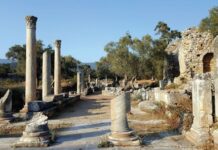
In this town, the Lutherans once had a school or college, but it was destroyed along with many other buildings during past conflicts. Only ruins now remain to show where learning and teaching once took place. The religious life of the people has also changed over time due to war, poverty, and foreign rule.
The inhabitants of the area live as tributaries under Turkish authority. Each year, they must pay a tax for every living being they possess. This tax is collected per head, whether for men, women, children, sheep, oxen, or horses. The amount, though small in value, places a constant burden on the population and reminds them of their political dependence Guided Tours Turkey.
Daily Life and Social Customs
The people of this region are raised in a life of hardship from a young age. Children are taught to endure difficult conditions and to live simply. This early training prepares them for the challenges of frontier life. Women, in particular, are known to marry only once in most cases, and it is uncommon for them to remarry after the death of a husband.
Cleanliness and health practices are an important part of their daily life. They bathe frequently and often use heated stoves where they sweat while sitting naked in warm environments. During this process, they keep their feet in warm water to maintain body heat. This method is believed to improve health and strengthen the body against illness.
They also make frequent use of cupping glasses and scarification as traditional medical treatments. These practices are used to relieve pain, improve circulation, and treat various physical complaints. Although these methods may seem unusual to outsiders, they are widely accepted in the local culture.
Religious Institutions and Clergy
In the Franciscan convent of the area, only twelve friars remain. This small number shows how much the religious institutions have declined over time. Among the Roman Christians living in these parts, there are very few priests available. Because of this shortage, monks often take on the duties that would normally be performed by parish priests Before the Judge A Matter of Travel and Duty.
This situation affects the spiritual life of the community, as regular religious services and guidance become more limited. Still, the people continue to practice their faith as best as they can under these conditions.
The Baths Near Bancor
About two Hungarian miles from Freistadt lies a place called Bancor. In a low area near the River Waag, there are fifteen baths. Over time, the river has slowly worn away its banks due to its strong and rapid current. As a result, water from the river has entered three of these baths.
Twenty years earlier, there were also hot baths on the opposite side of the river. However, these have now been covered by the cold stream and are no longer visible. The waters of these baths leave a white sediment on surfaces and can quickly turn copper and silver black, almost like ink. This strange effect makes the baths both interesting and remarkable.
Natural Features and Observations
Close to the baths, there is a stone quarry and several veins of chalk. The chalk is especially beautiful, appearing in many colours except green. These colours are mixed in such a fine and natural way that they resemble painted marble or decorative paper. The sight is both rare and pleasing to the eye.
We arrived there on the 18th of March, when the weather was extremely cold. Because the baths were in an open place, we had no desire to bathe in such freezing conditions, even though we saw women and children doing so without hesitation. After supper, the Hussar who drove our carriage surprised us greatly. Despite the severe frost and the midnight cold, he removed his clothes in the open meadow and bathed himself in one of the baths, showing the toughness and endurance common among the people of that region.